Layout Designer
HomeUpdated on February 6, 2024.
I started the layout designer in 2020 during the pandemic. It began because, at the time, I would play online escape games with my high school friends. I became obsessed with the idea of these escape games having encounters and environments which are randomly generated.
Two years after graduating, in 2022, I decided to revisit it.
Initially the big idea for this algorithm involved taking a cube part and splitting it in half, then repeatedly doing this and generating walls at the end. Above shows the result: hundreds upon hundreds of randomly generated room layouts.
I realized the idea had potential, but I also realized that it could only work with squares and 90 degree angles. So I decided to make it more applicable.
A couple of months later I reapproached the idea with a Cut subalgorithm, which takes in a shape and an arbitrary line and slices the shape into different pieces.
Then those said pieces could be built into walkable spaces.
What was great about this version was that it allowed for angled cuts. This added infinitely more variety to the kinds of shapes and spaces that I could generate. I was able to get cuts from really irregular shapes which was impossible before.
Occasionally there would be a glitch and the cut would fail due to issues with numeric stablity. So I implemented a cut renderer to scan for any irregular results or clipping issues. As I worked on it, I got the algorithm to have a near-flawless success rate. Above shows a video of the revised algorithm at work, each frame being a new cut, with no glitches.
Here's another video, but with each frame having multiple cuts.
Behind the scenes, I did a lot of brainstorming. I searched for ways to generate spaces with more intention and figured that the best way to accomplish this was to upgrade from a cut algorhtm to a clipping algorithm such as negation, intersection, and union.
After a lot of revising and reapproaching throughout the years, I redesigned the entite system from the ground up based around a widely known concept: a Venn diagram.
Intersection, negation, and union happen when you overlap two shapes much like a Venn diagram. Think of union as the combined two shapes, intersection as the area included by the two shapes, and negation as one shape clipped by the other shape.
It took lots of drawing and testing to figure out how to code this and which direction to go when an intersection is encountered.
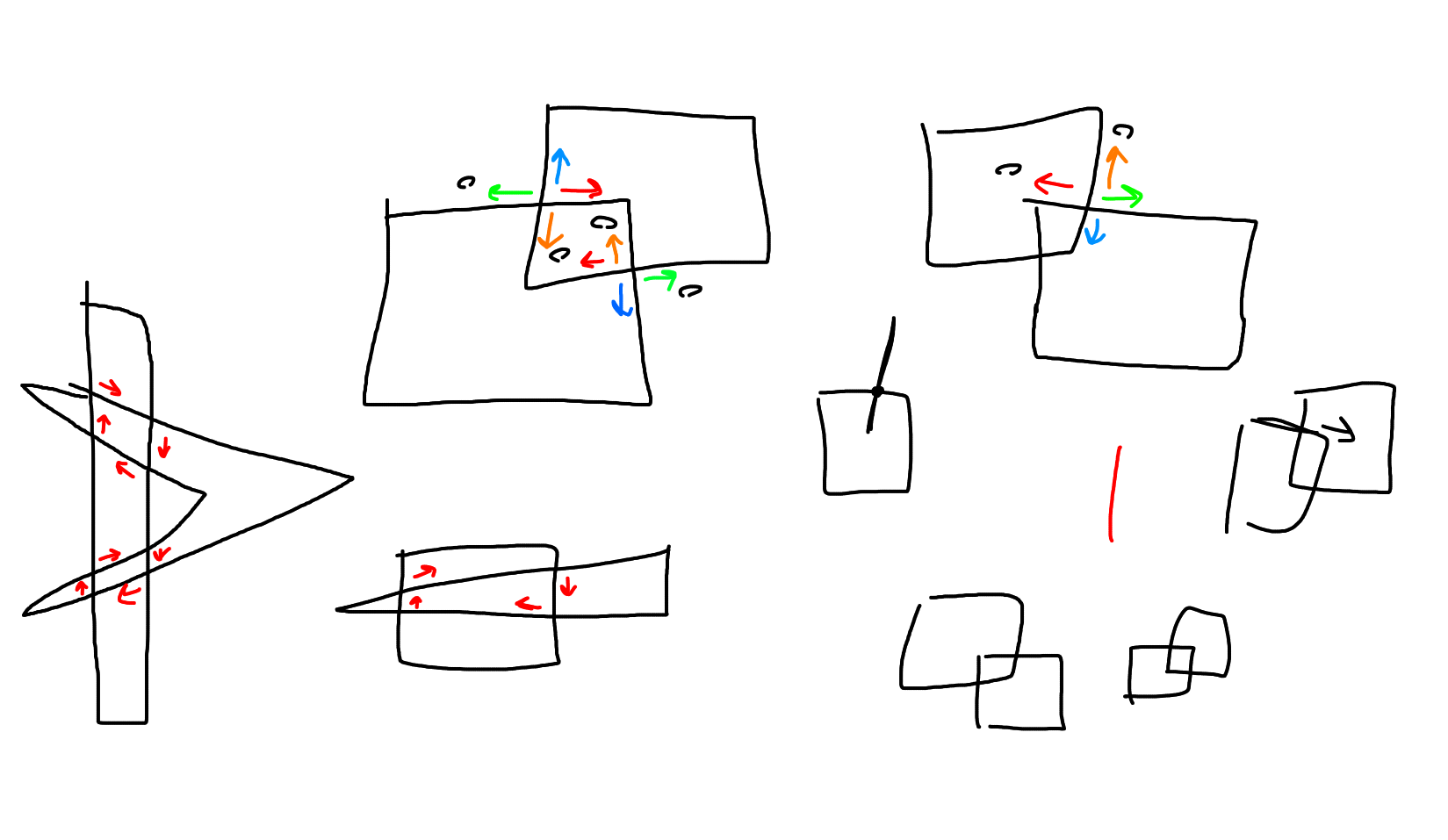
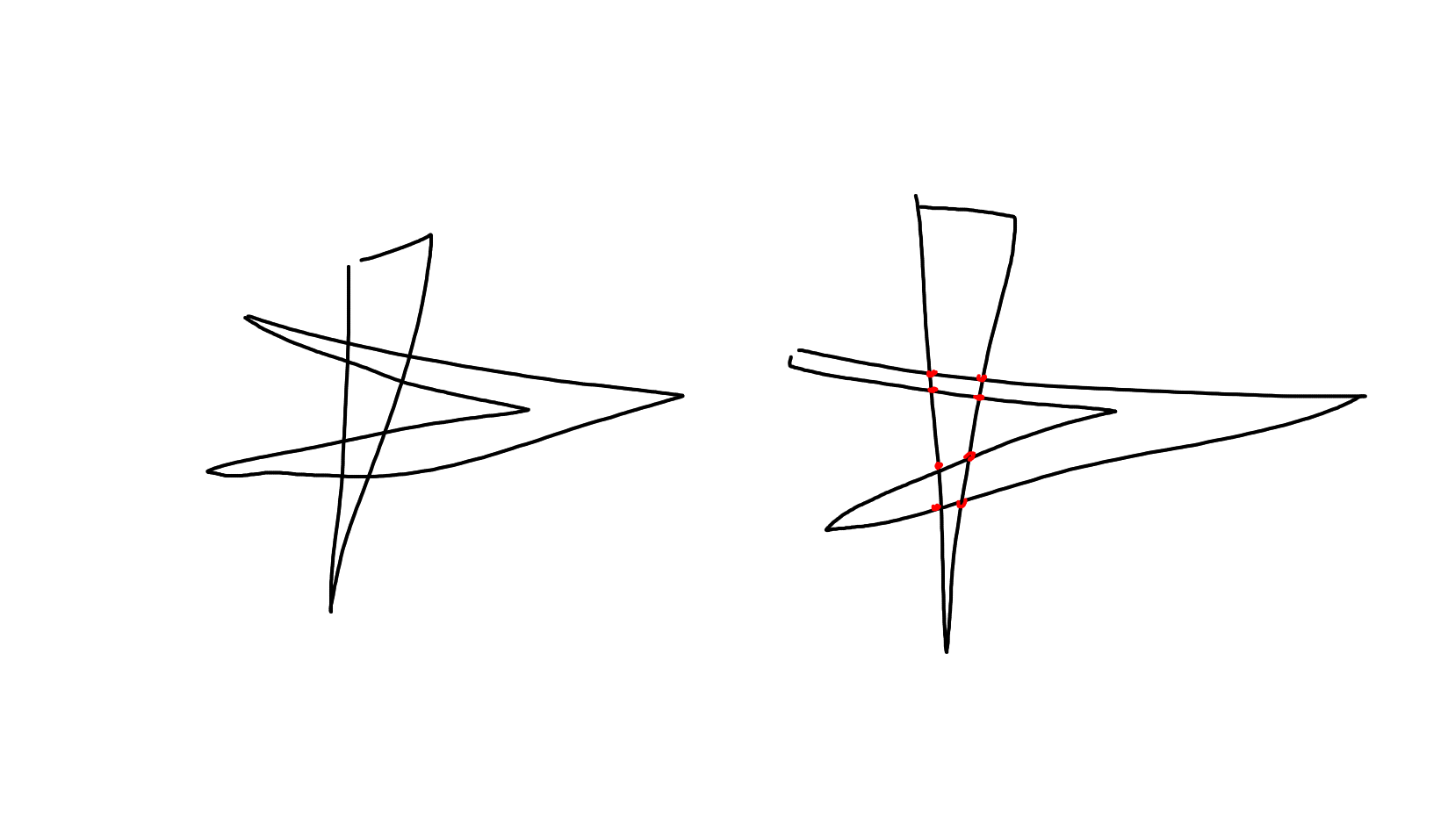
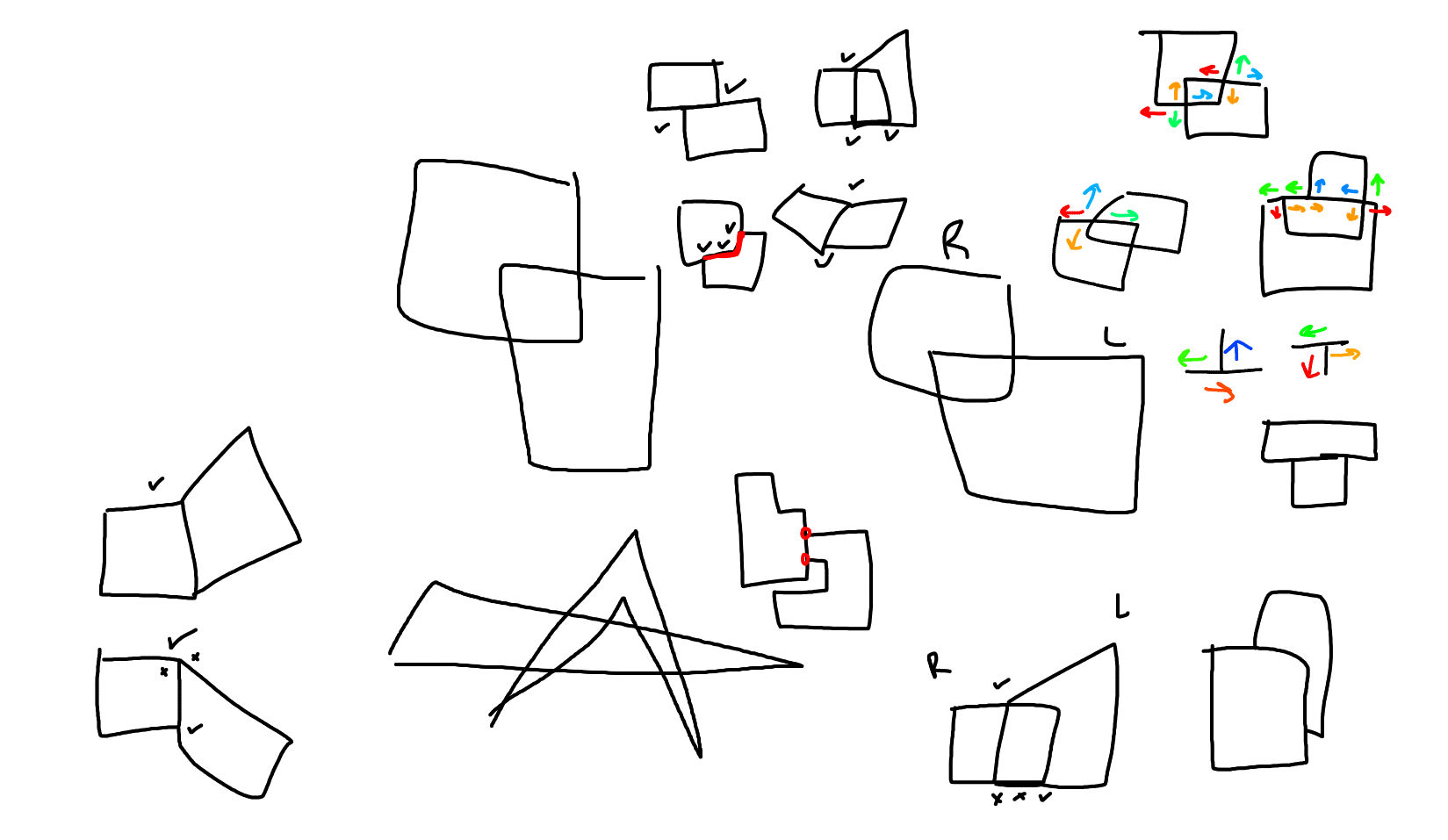
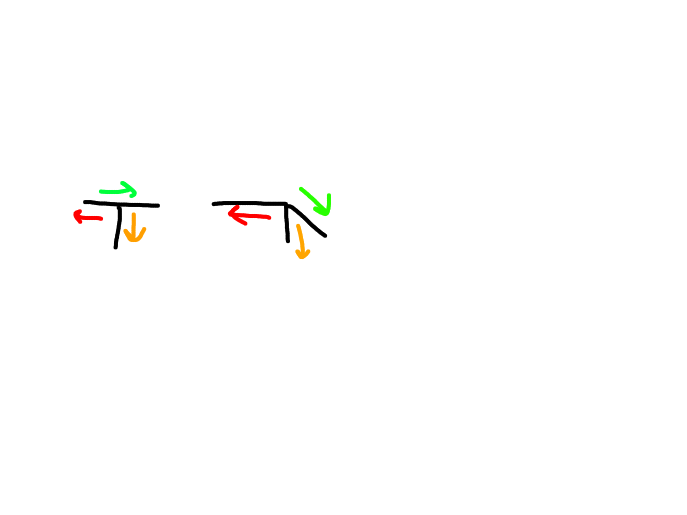
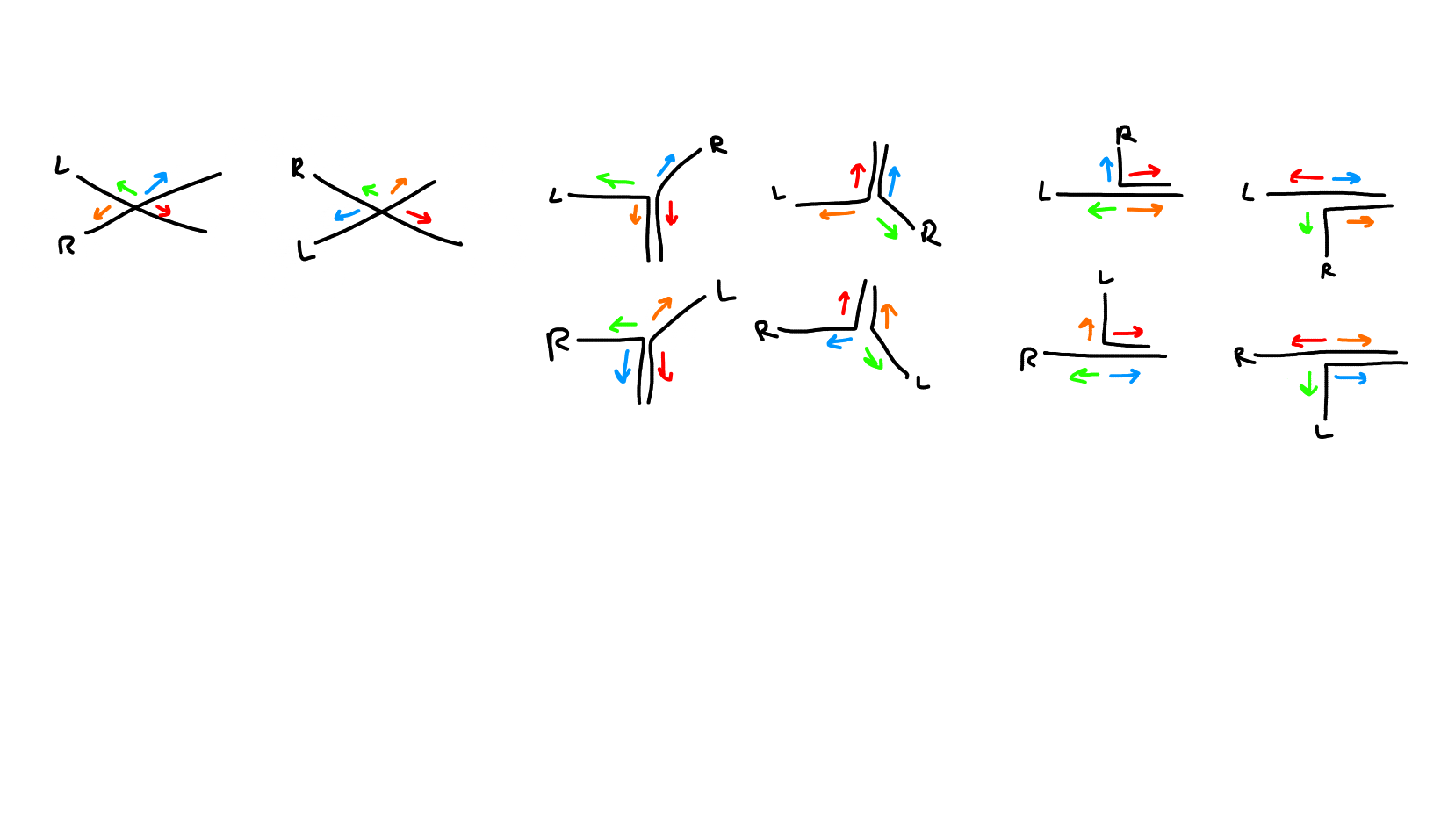
Eventually, I got it right, however.
Here is the finished result of the Venn subalgorithm, which takes two shapes and calculates all four (intersection, union, left negation, and right negation) from an overlap.
This algorithm became the building block for a schematics system, which uses the Venn algorithm to subdivide areas as well as carve new areas from scratch.
I then developed a node based editor that intuitively lets me use the Venn algorithm in tandem with other algorithms I designed along the way. I made an area building algorithm, which uses triangulation to fill in an area with Parts, and a perimeter building algorithm, which traces the current shape and places Parts along its perimeter.
As of February 2024, this is the current progress of the system.
Continuing this algorithm will mean finishing this node-based editor and experimenting with ways to make it more intuitive and interactive.
View Generator Keys Schematics Test